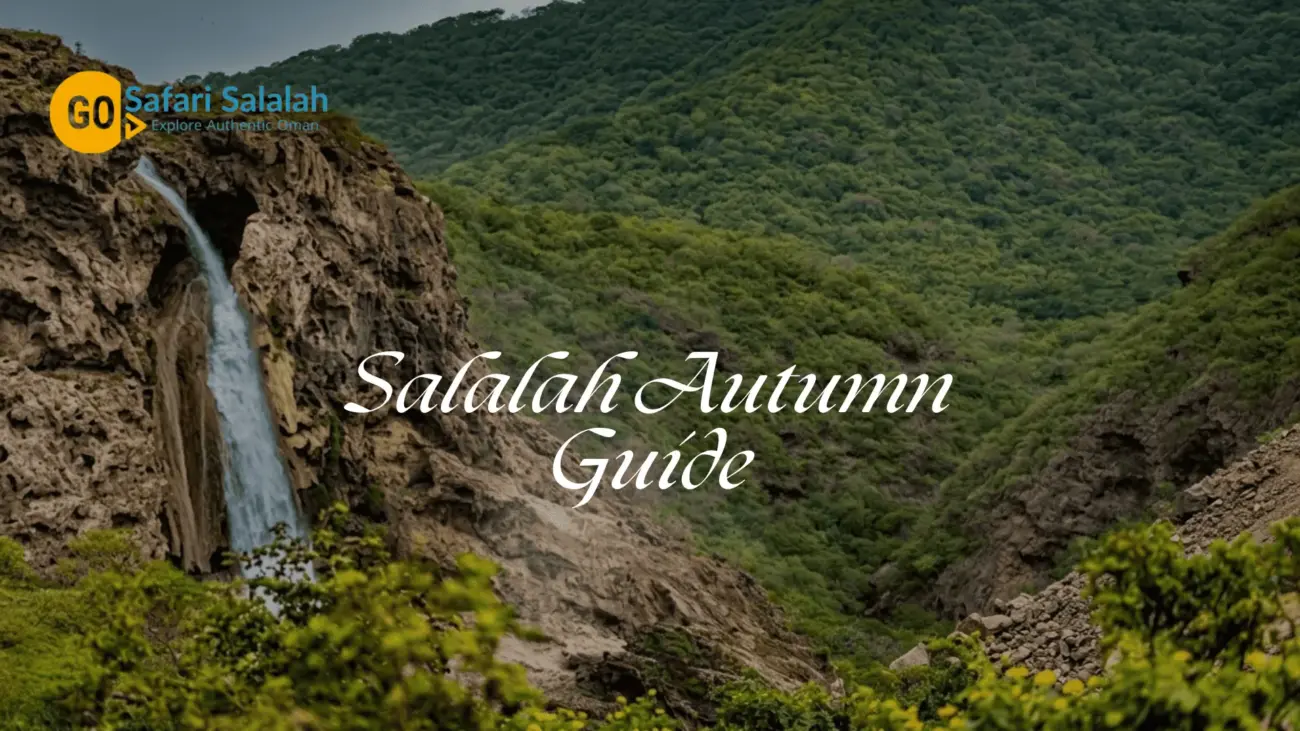


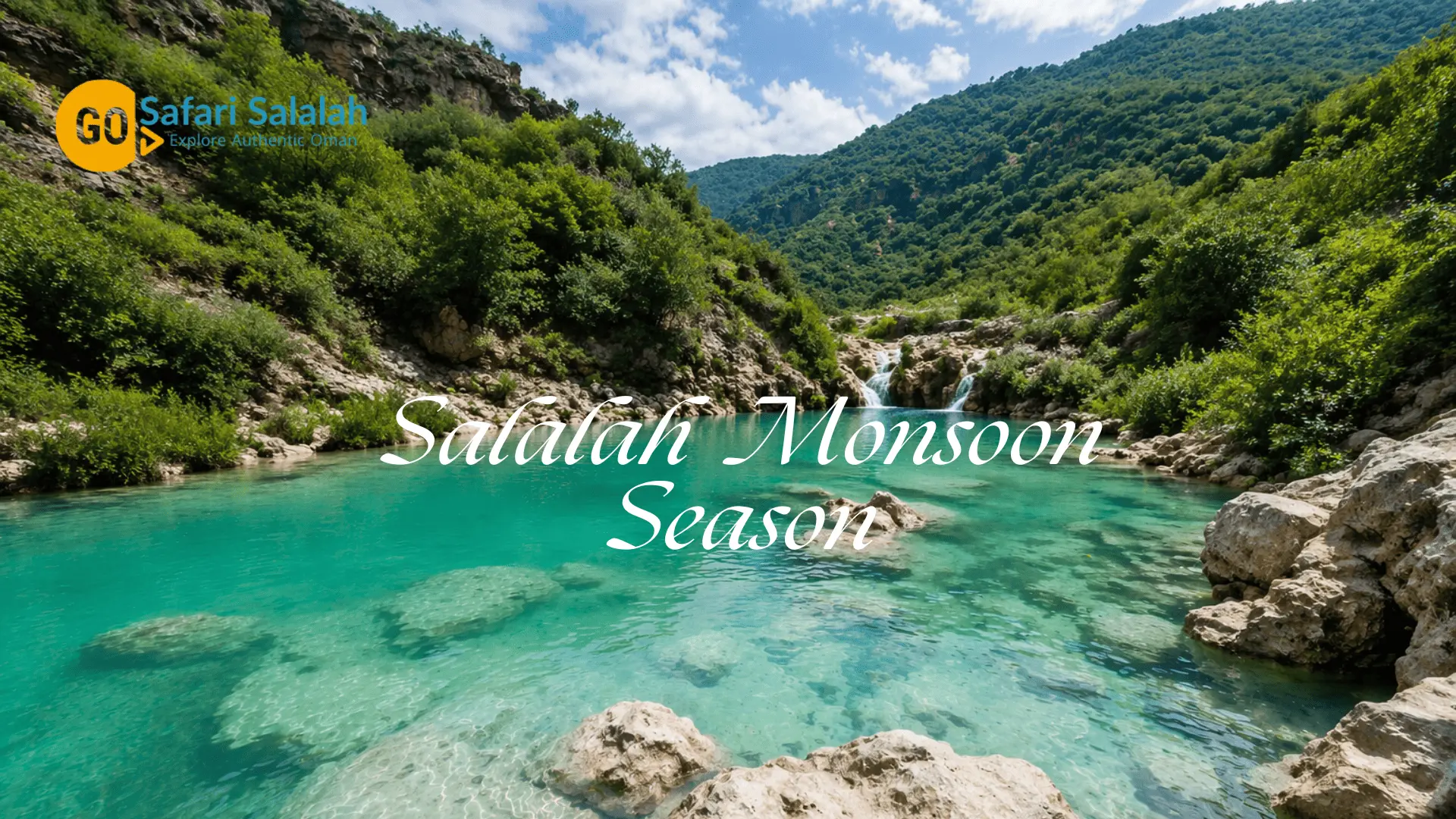
he Salalah monsoon season, locally known as “Khareef,” is a meteorological marvel that transforms the southern coast of Oman into a verdant paradise. Unlike the typical monsoon rains found in Southeast Asia, the monsoon in Salalah is characterized by a persistent, ethereal mist and cooling drizzle that blankets the Dhofar governorate. This transformation is so dramatic that it draws travelers from across the globe who seek a sanctuary from the scorching summer heat of the Arabian Peninsula.
What Defines the Khareef in Salalah?
- The Temperature Drop: While surrounding regions face temperatures exceeding 45°C, Salalah maintains a refreshing 20°C to 25°C.
- The Emerald Transformation: Within weeks, the arid brown mountains turn a vibrant, fluorescent green, a sight that feels almost surreal in the heart of the Middle East.
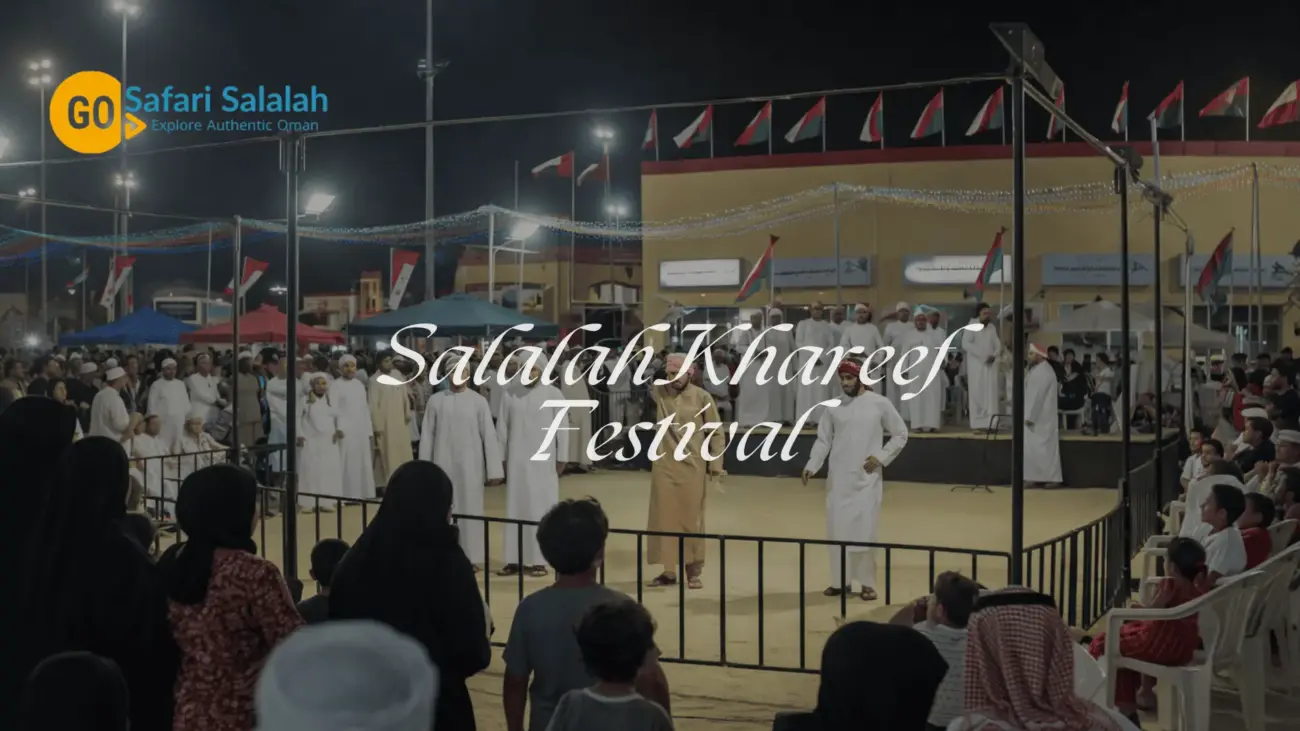
- The Social Fabric: The Salalah Khareef festival brings the city to life with traditional dances, Omani crafts, and street food that celebrates the unique heritage of the Dhofar region.
Why This is the Best Time to Visit Salalah
Choosing the best time to visit Salalah depends on your preference for mist versus clarity. Early July offers the first hints of green, while August represents the peak of the lushness and the height of the monsoon in Salalah. By September, the clouds begin to part, offering stunning vistas of the green mountains against the blue Arabian Sea. This guide serves as your comprehensive roadmap to navigating this seasonal wonderland, ensuring you don’t miss a single waterfall or hidden valley.
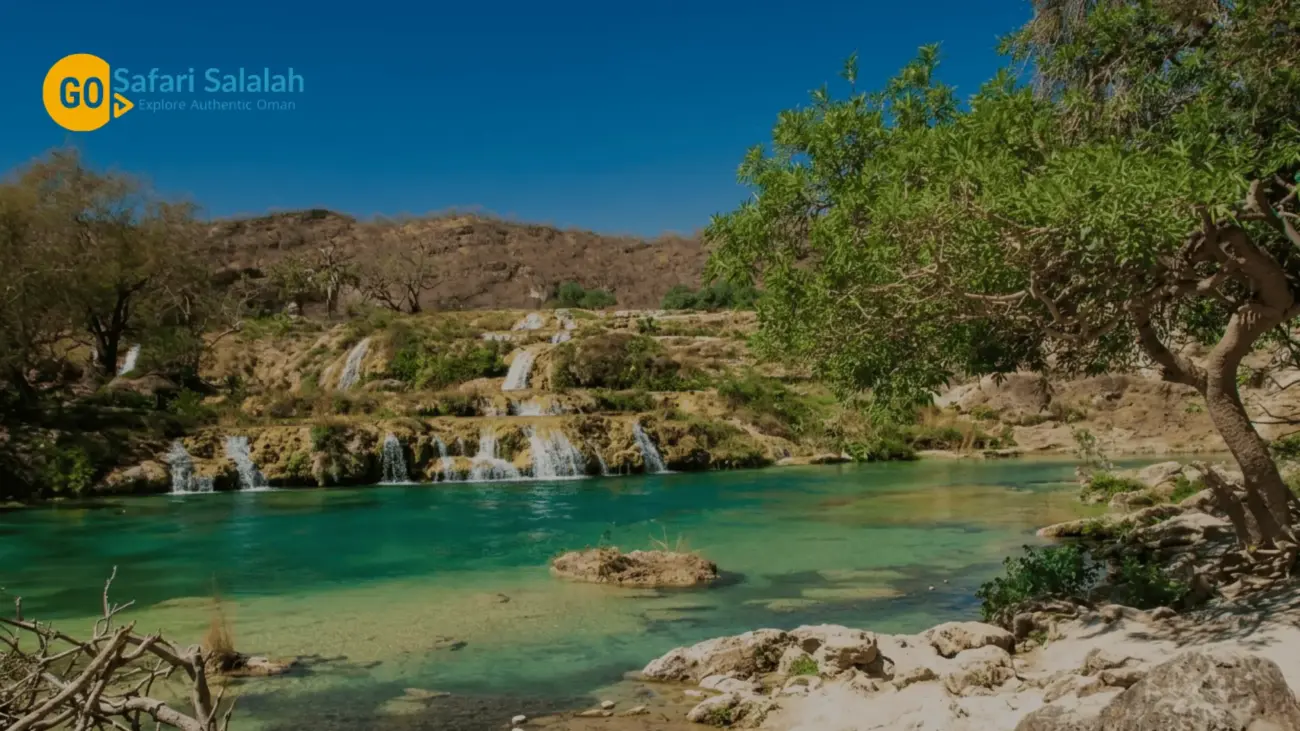
Planning Your Trip: Navigating the Salalah Khareef Season
Planning for the Salalah Oman Khareef season requires a different mindset than a standard beach holiday. Because the environment becomes incredibly humid and damp, your logistics—from your vehicle choice to your wardrobe—must be tailored to the unique conditions of the Salalah autumn. This section breaks down the essential preparations to ensure your journey is seamless and enjoyable.
Monthly Breakdown: Salalah in July, August, and September
- July (The Awakening): This is when the “first green” appears. It is the perfect time for those who want to witness the transformation of the landscape without the peak crowds.
- August (The Peak): The waterfalls like Ayn Athum and Ayn Khor Salalah are at their most powerful. The khareef festival salalah is in full swing, offering a deep dive into Omani culture.
- September (The Transition): The rain begins to taper off, but the mountains remain intensely green. This is the best month for photography as the visibility improves significantly.
Essential Gear for the Monsoon in Salalah
- Footwear: High-traction, waterproof hiking shoes are non-negotiable. The trails around Wadi Darbat Salalah become extremely slippery and muddy.
- Transportation: While a sedan can manage city roads, a 4WD is highly recommended for reaching viewpoints like Jebel Samhan Salalah, where the clouds literally touch the mountain peaks.
- Photography Equipment: Bring waterproof covers for your cameras and phones. The constant mist can easily damage sensitive electronics, yet it provides the most beautiful natural lighting for your shots.
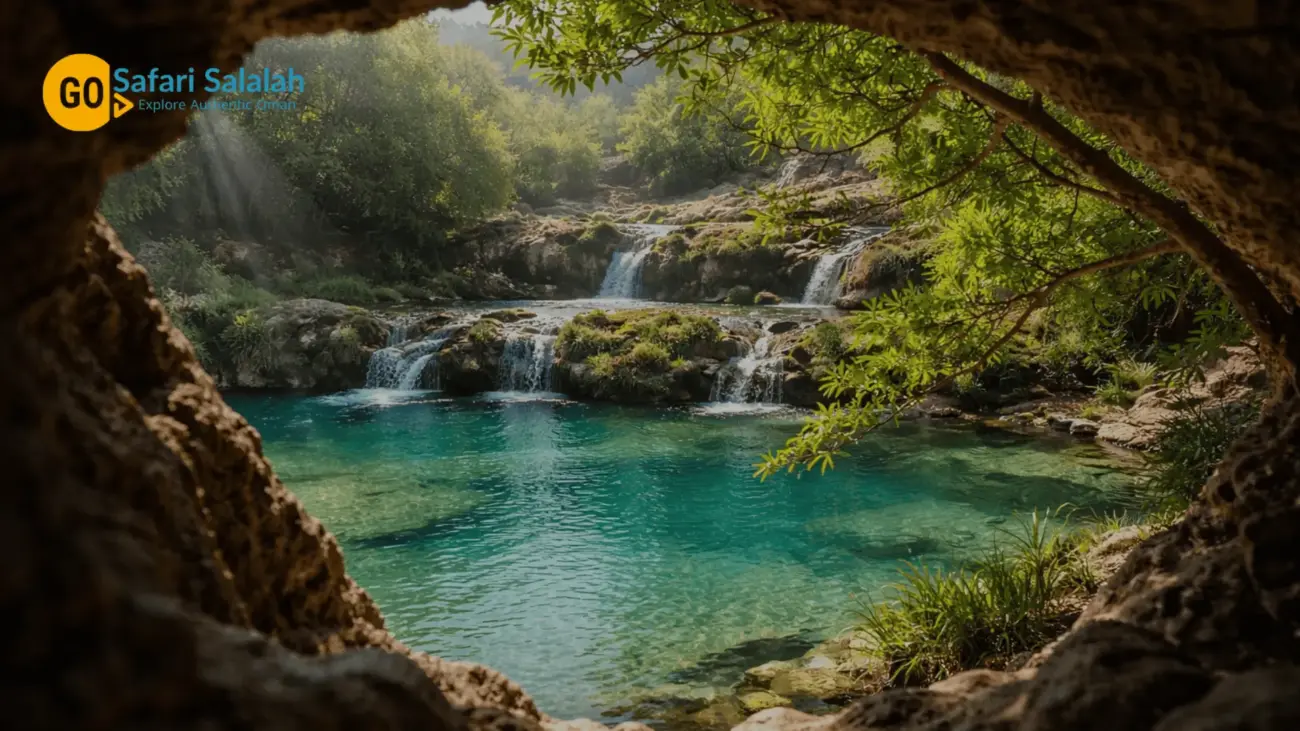
The Crown Jewel: Exploring Wadi Darbat Salalah
When people search for the best places to visit in Salalah in Khareef, Wadi Darbat is invariably at the top of the list. This natural park is a sprawling carpet of green, home to wandering camels, a massive natural lake, and several layers of waterfalls. During the Salalah monsoon season, the wadi transforms into a scene that looks more like the Scottish Highlands or the Swiss Alps than the Arabian Peninsula. It is the ecological heart of the Dhofar region, providing a sanctuary for diverse flora and fauna.
Activities and Experiences in Wadi Darbat
- Boat Rides on the Lake: You can hire pedal boats or motorboats to cruise the Darbat Lake. The experience of being on the water while surrounded by mist-covered mountains is one of the most serene activities in a Salalah itinerary.
- The Travertine Curtain Waterfall: This is a seasonal marvel. When the monsoon in Salalah is heavy, a massive wall of water cascades down the cliffside, creating a “curtain” effect that can be seen from miles away.
- Picnicking Among Nature: There are designated areas for families to sit, but be prepared to share your space with local cows and camels who are very friendly (but eager for snacks!).
Photography Tips for Wadi Darbat
To capture the true essence of the Salalah Khareef season at Wadi Darbat, arrive early in the morning (around 7:30 AM). The mist is thickest at this time, providing a soft, cinematic glow to your photos. Use a wide-angle lens to capture the scale of the valley, and don’t forget a lens cloth—the humidity and constant drizzle will require you to wipe your lens every few minutes to keep your shots crisp.
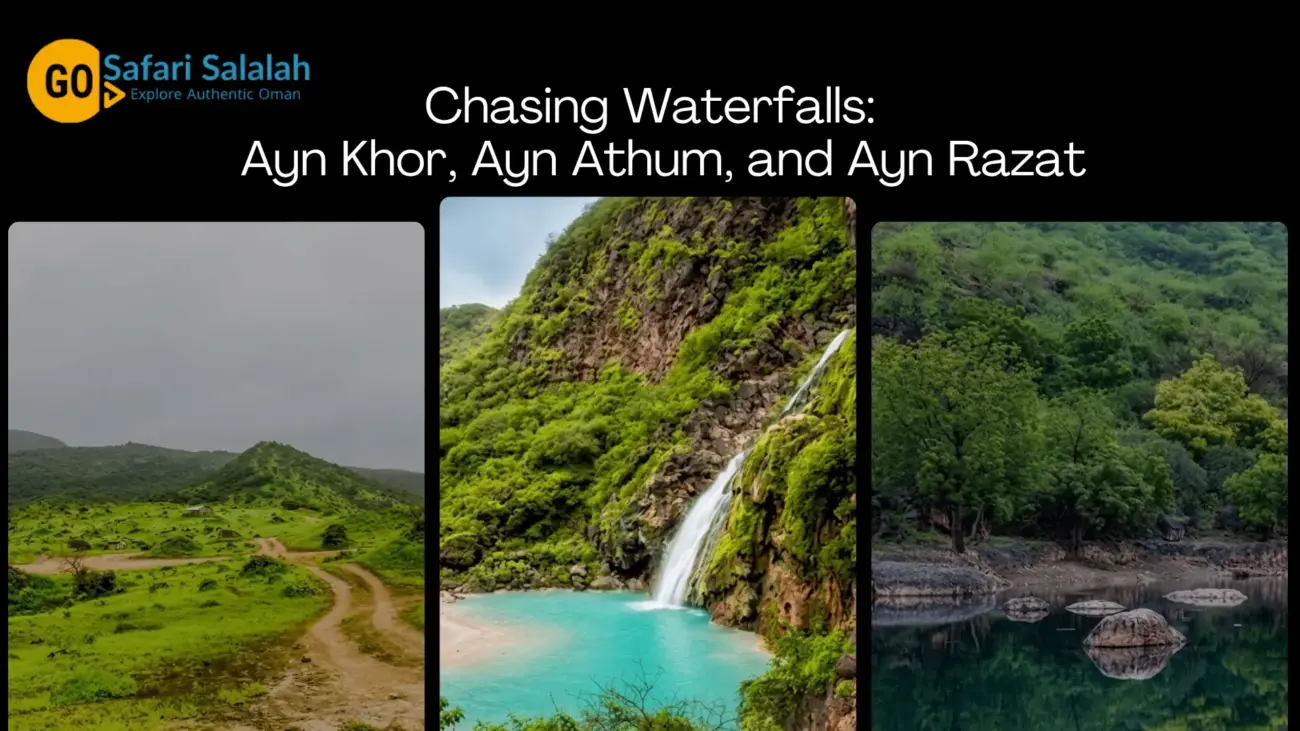
Chasing Waterfalls: Ayn Athum, Ayn Khor, and Ayn Razat
No Salalah travel guide is complete without a deep dive into the “Ayns” (Springs). These springs are the lifeblood of the region, and during the Salalah in August peak, they erupt into spectacular waterfalls. Each spring has a different personality: some are powerful and thunderous, while others are calm, turquoise pools perfect for reflection.
Comparing the Major Springs of Salalah
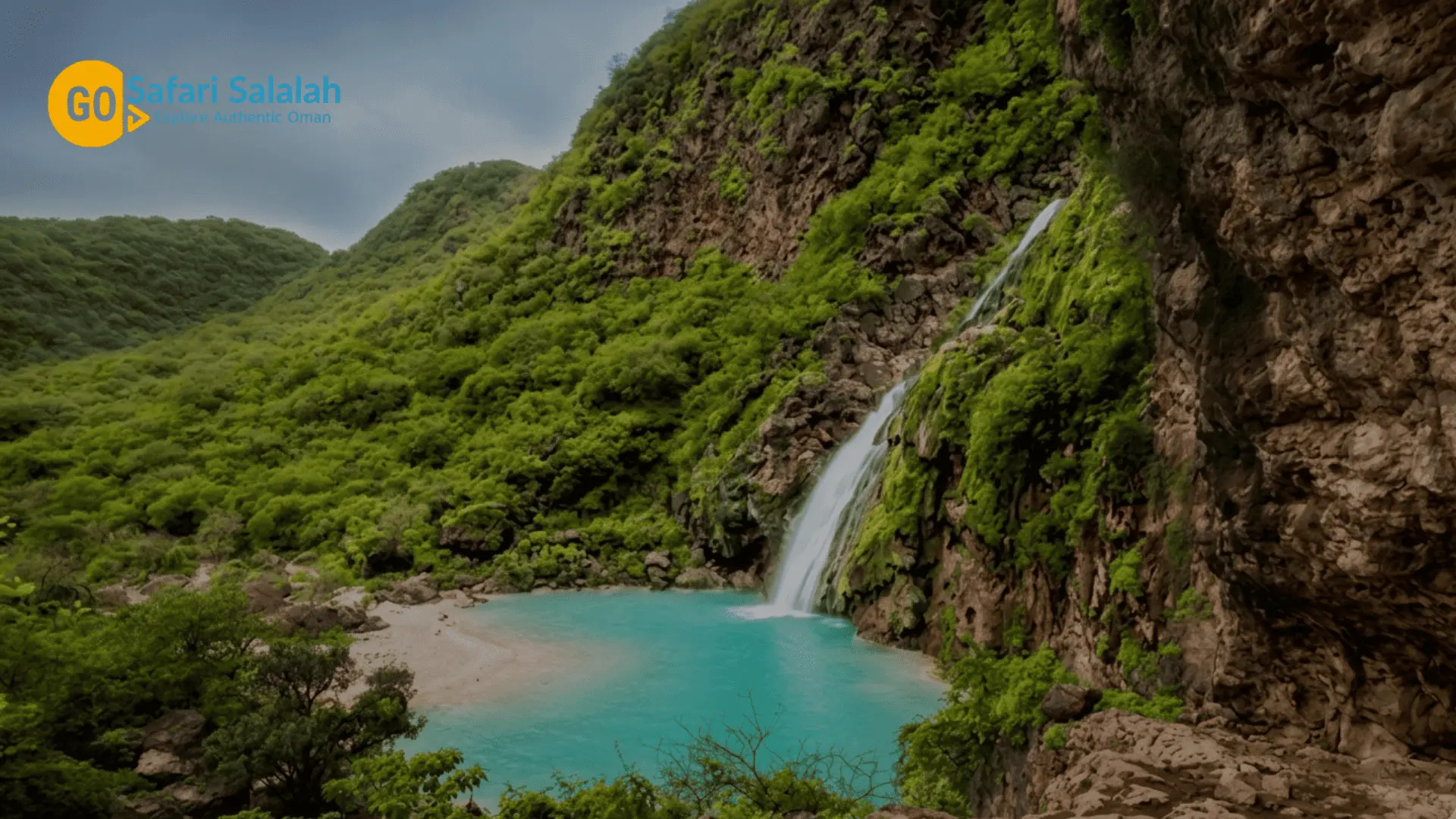
- Ayn Athum Waterfall: Often cited as the most beautiful waterfall in Oman. It features a multi-tiered drop where water flows over lush green moss. It is most active during the height of the Salalah monsoon season.
- Ayn Khor Salalah: Known for its stunning turquoise pool at the base of a tall limestone cliff. The drive to Ayn Khor can be rugged, so a 4WD is often necessary after heavy rain.
- Ayn Razat Salalah: This is the most accessible spring, located close to the city center. It features beautifully landscaped gardens and a cave system. It is a year-round spring but becomes exceptionally lush during the Khareef in Salalah.
Safety Near the Waterfalls
While the water looks inviting, always follow local signage regarding swimming. During the Salalah Oman Khareef season, the currents in some pools can be deceptively strong due to the high volume of mountain runoff. Additionally, the rocks around Ayn Athum are covered in slick moss; always wear shoes with excellent grip to avoid falls while chasing that perfect Instagram shot.
Above the Clouds: The Majesty of Jebel Samhan Salalah
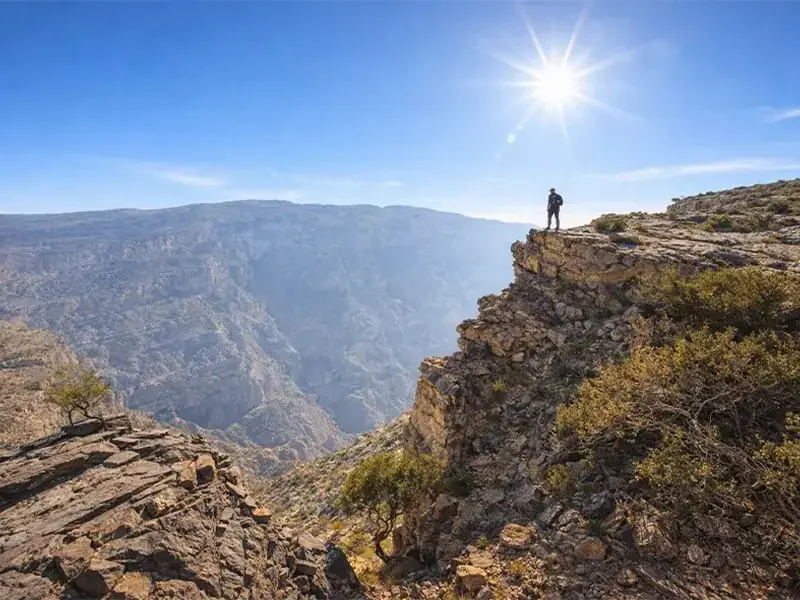
If you want to experience the true scale of the Dhofar mountains, you must ascend to Jebel Samhan Salalah. Standing at over 2,100 meters, this is one of the highest points in the region and offers a “view from the heavens.” During the Salalah monsoon season, Jebel Samhan provides a unique perspective: while the valleys below are shrouded in clouds, the peak often sits just above the cloud line, creating a “sea of clouds” effect.
Why Jebel Samhan is a Must-Visit
- The Sea of Clouds: Standing at the edge of the escarpment, you look down not at the ground, but at a rolling white ocean of mist. It is arguably the most iconic sight in any Salalah itinerary.
- Wildlife Spotting: Jebel Samhan is a protected nature reserve. While the rare Arabian Leopard is elusive, you are very likely to see Nubian Ibex and various birds of prey circling the thermals.
- The Sinkholes: Near the mountain range lies the Tawi Attair Sinkhole (the “Well of Birds”), one of the largest in the world. It is a dizzying drop into the earth that showcases the unique limestone geology of the region.
Preparing for the Ascent
The temperature at the top of Jebel Samhan can be significantly cooler than in the city, often dropping below 15°C. Even during the Salalah in July heat elsewhere, you will need a light jacket or sweater here. The road is paved and accessible, but the drive involves many hairpin turns. Ensure your vehicle’s brakes are in top condition before making the climb, as the descent can be taxing on the car’s braking system in the damp, misty conditions.
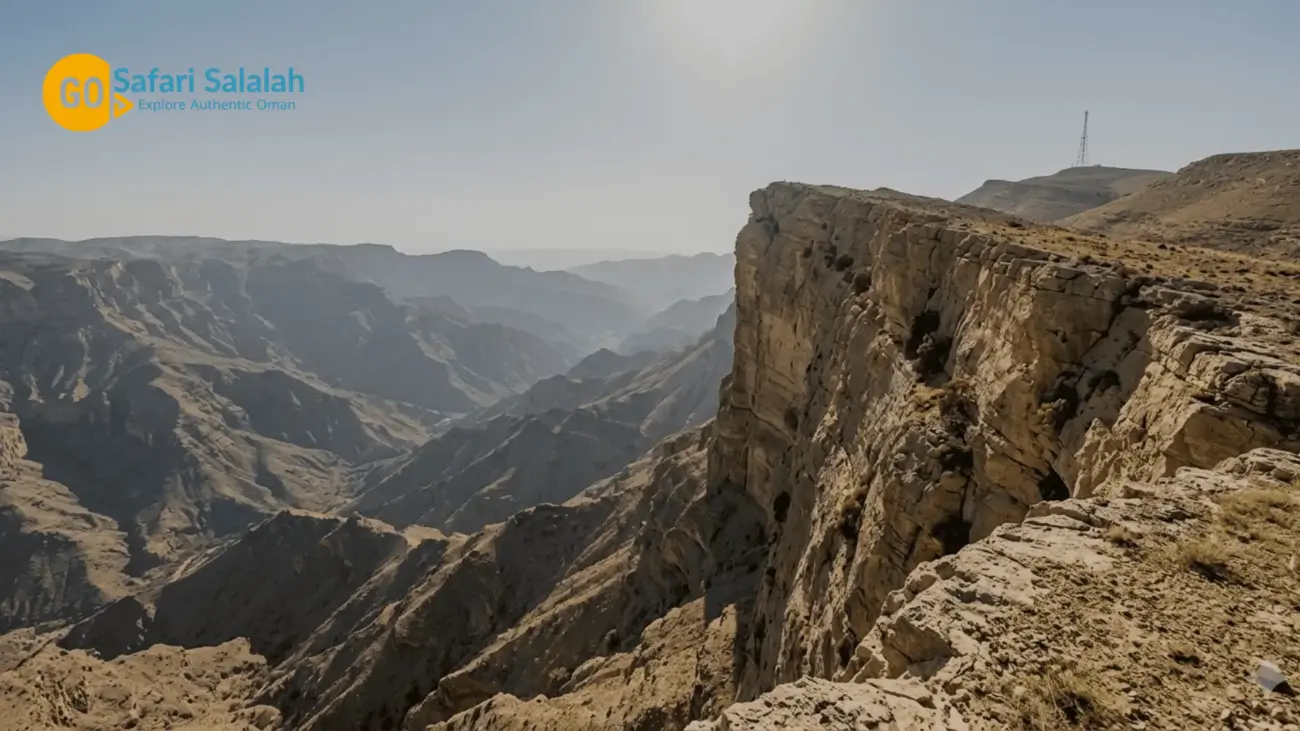
Coastal Wonders: Mughsail Beach and the Marneef Cave
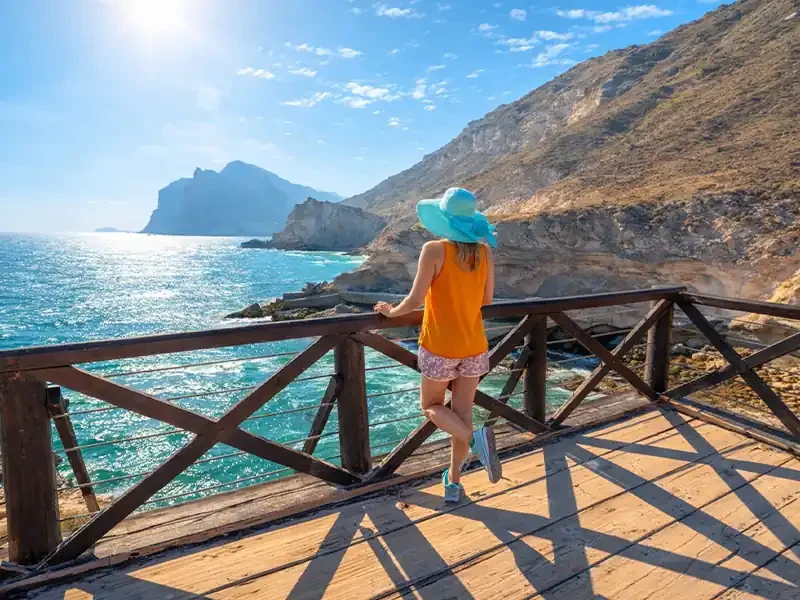
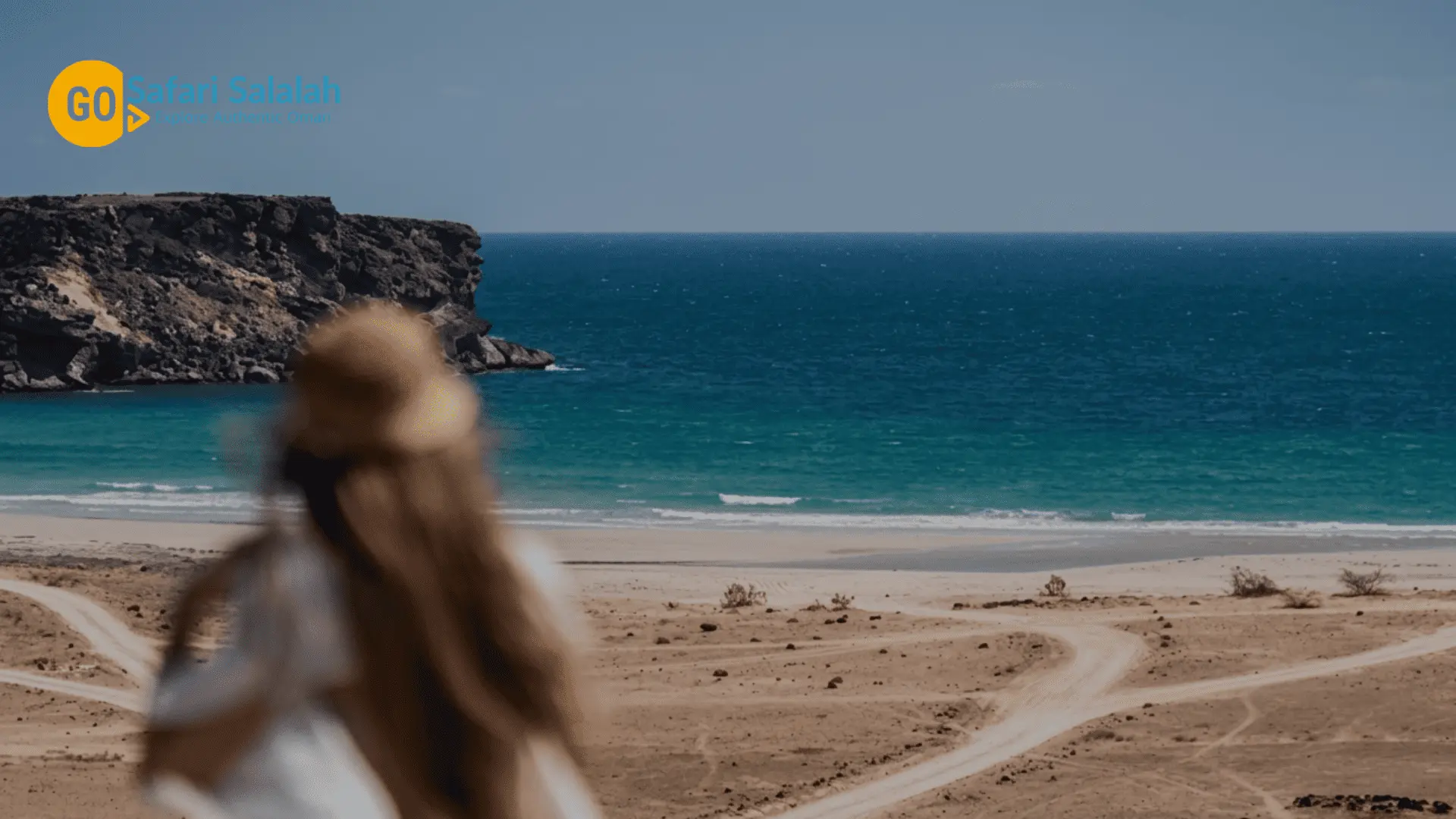
When discussing the best places to visit in Salalah in Khareef, the coastal area of Mughsail is a mandatory mention. Located about 40 kilometers west of Salalah, Mughsail Beach offers a dramatic contrast to the green wadis. Here, the turquoise waters of the Arabian Sea meet high limestone cliffs. During the Salalah monsoon season, the sea becomes incredibly restless, with massive waves crashing against the rocks, creating a symphony of nature that is both terrifying and beautiful.
The Phenomenon of the Marneef Cave Blowholes
- The Natural Fountains: The most famous attraction here is the “blowholes.” These are natural vents in the limestone floor. As the powerful monsoon waves crash into the cliffs below, water is forced through these vents, shooting up to 30 meters into the air like natural geysers.
- Marneef Cave: This is not a deep cave, but rather a massive rock overhang that provides a perfect vantage point to watch the sea. It offers much-needed shelter from the monsoon in Salalah while allowing you to enjoy the panoramic views of the coastline.
- The Panoramic Drive: The road leading to Mughsail is a marvel of engineering, featuring the “Zig-Zag” road that climbs the mountainside, offering bird’s-eye views of the crashing surf below.
Safety and Timing at Mughsail
Visiting Mughsail during Salalah in August is peak time for the blowholes because the sea is at its roughest. However, safety is paramount. The “splash zone” around the blowholes can be very slippery, and the force of the water is strong enough to knock a person down. Stay behind the safety railings at all times. For the best lighting, visit during the late afternoon; the mist hanging over the cliffs creates a dramatic, moody atmosphere perfect for long-exposure photography of the waves.
The Scent of History: The Frankincense Trail and Al Baleed
Salalah is not just a natural wonder; it is a city steeped in ancient history. It was once the center of the global Frankincense trade, a resin so valuable it was known as “Desert Gold.” Understanding the Salalah Oman Khareef season involves understanding how this climate allowed the Boswellia sacra trees to thrive, providing the world with the finest incense for millennia.
Exploring Al Baleed Archaeological Park
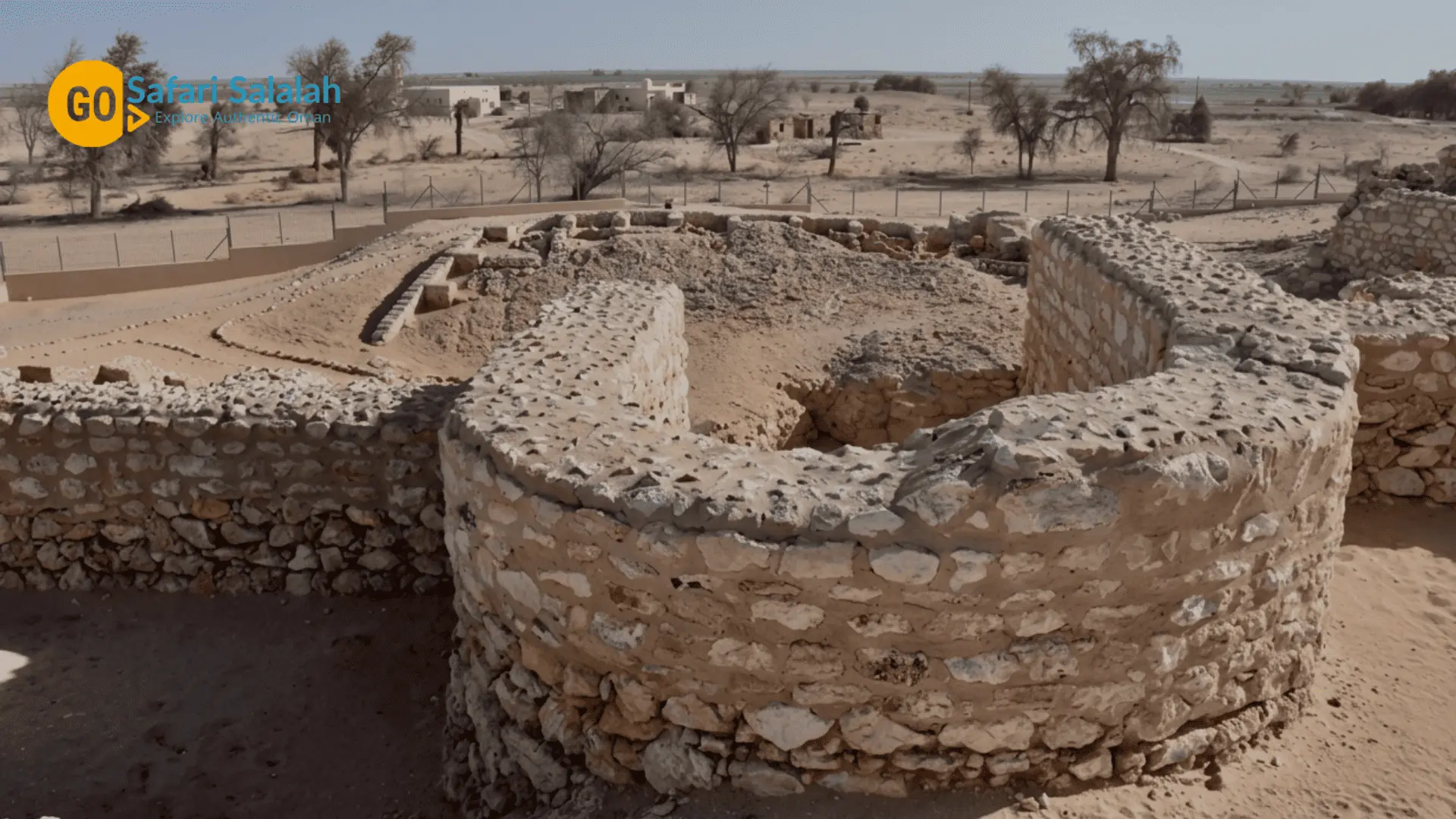
- A UNESCO World Heritage Site: This park contains the ruins of the ancient city of Zafar. Walking through the ruins during the Salalah autumn is a hauntingly beautiful experience as the mist drifts through the ancient stone arches.
- The Land of Frankincense Museum: This museum is divided into two halls—the Maritime Hall and the History Hall. It provides a comprehensive look at Oman’s seafaring legacy and the botanical history of the Frankincense tree.
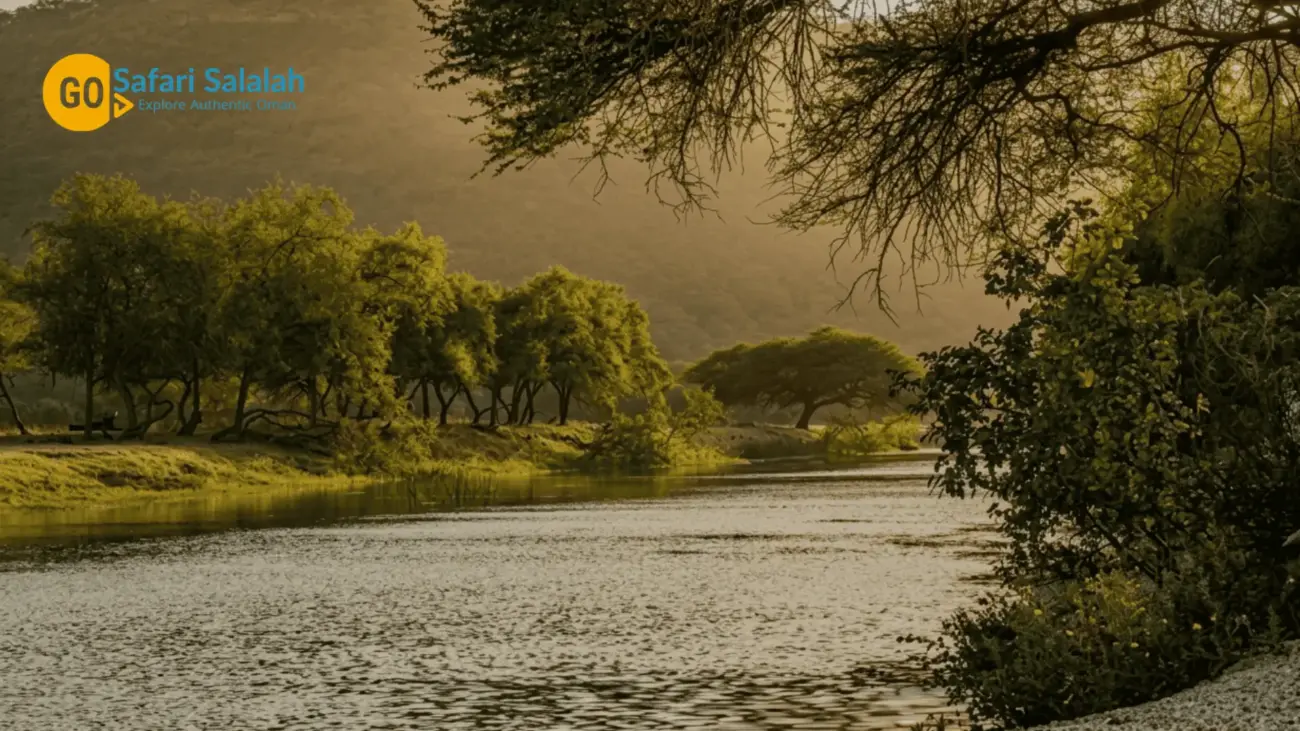
- The Waterfront Walk: The park features a freshwater lagoon (khawr) that is a haven for migratory birds. During the Salalah monsoon season, the greenery around the lagoon becomes incredibly lush, making it a peaceful spot for a sunset stroll.
The Frankincense Experience in Haffa Souq
To truly immerse yourself in the culture, visit the Haffa Souq. During the Khareef festival Salalah, the souq is filled with the thick, sweet aroma of burning frankincense. You can buy various grades of the resin, from the everyday “Hojari” to the rare “Royal Green” frankincense. Engaging with the local vendors, many of whom have been in the trade for generations, provides a personal connection to the history of the monsoon in Salalah that you won’t find in any textbook.
Gastronomy of Dhofar: Flavors of the Khareef Festival
Food is a central pillar of the Salalah Khareef festival. The local Dhofari cuisine is distinct from northern Omani food, influenced by the region’s geography and its historical trade links with East Africa and India. During the Salalah in July and August, the city becomes a giant open-air kitchen, with the smell of grilled meats and fresh spices wafting through the cool, damp air.
Must-Try Dishes in Salalah
- Muthbe: This is the most iconic Dhofari dish. It consists of salted meat (usually chicken or beef) cooked over hot stones. The stones give the meat a unique smoky flavor and a tender texture that is unmatched by traditional grilling.
- Maajeeb: A fragrant rice dish cooked with local spices and served with meat or fish. During the monsoon in Salalah, a hot plate of Maajeeb is the ultimate comfort food.
- Dhofari Bread (Kak): A slightly sweet, hard bread that is often dipped in tea or served with honey. It is a staple during the Salalah monsoon season picnics in the mountains.
Where to Eat During the Festival
While high-end hotels offer international buffets, the real soul of the food scene is at the Khareef Festival Salalah grounds in Ittin. Here, dozens of stalls set up specifically for the season. You can sit on traditional floor mats, surrounded by the mountain mist, and enjoy a communal meal. It’s an essential part of any Salalah itinerary, offering a chance to mingle with locals and experience the legendary Omani hospitality firsthand.
Off the Beaten Path: Discovering Salalah’s Hidden Gems
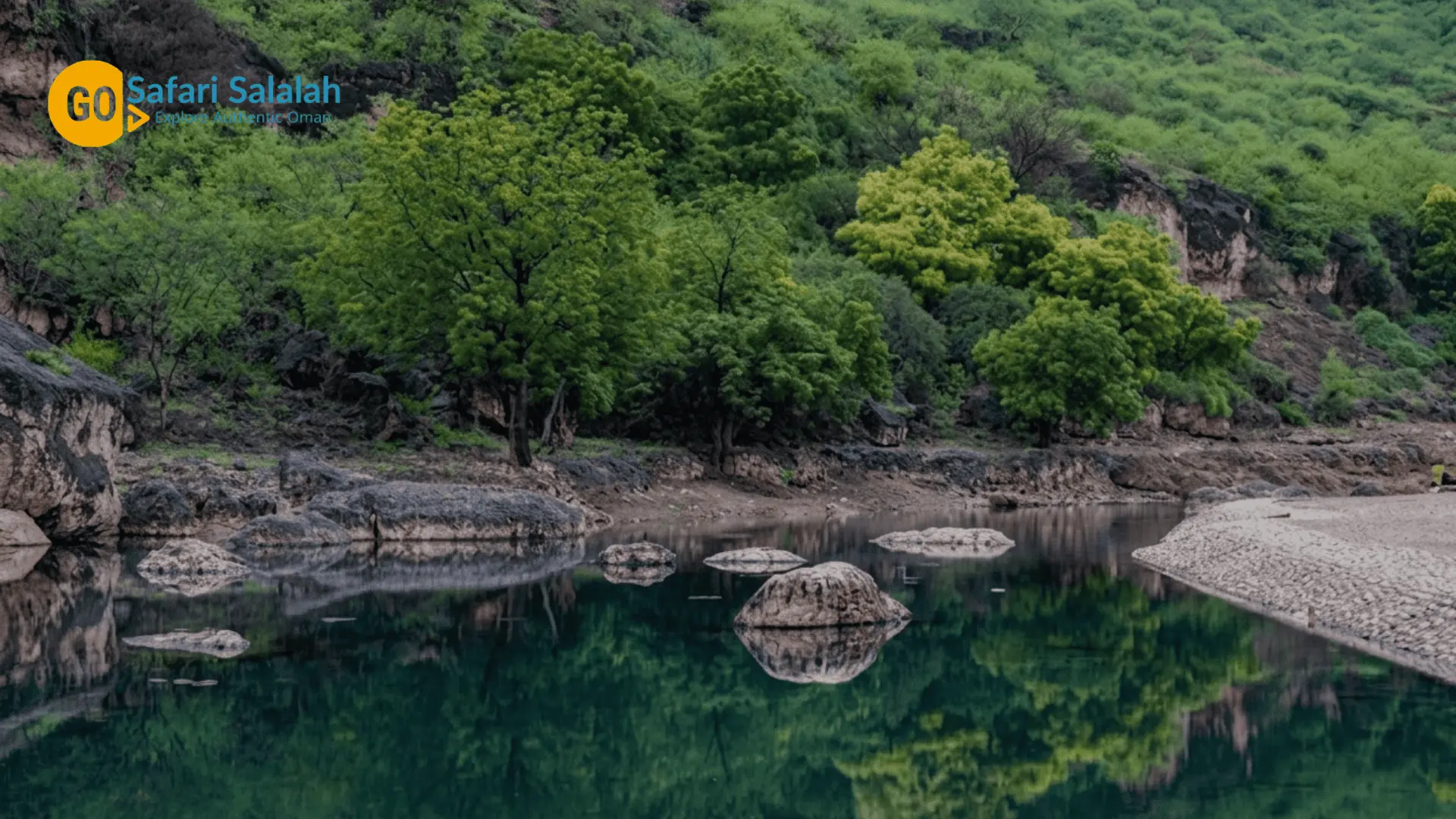
While Wadi Darbat is the most famous, the Salalah monsoon season hides several “secret” spots that are often overlooked by the casual tourist. Exploring these areas requires a bit more effort, but the reward is a tranquil experience of the monsoon in Salalah without the large tour groups. These locations offer the raw, untouched beauty of the Dhofar region in its most authentic state.
The Secret Oasis of Ayn Khor Salalah
- The Turquoise Pool: Hidden at the end of a rocky track, Ayn Khor Salalah is famous for its stunning blue water that contrasts sharply with the green moss-covered cliffs. It only flows during the peak of the Salalah in August rains.
- The 4×4 Requirement: This is a true “hidden gem” because the path can become a muddy swamp during the Salalah Oman khareef season. You will need a capable 4WD and a bit of driving skill to reach the base of the falls.
- Peace and Quiet: Because it is harder to reach, you can often enjoy the sound of the waterfall and the chirping of tropical birds in total solitude.
Exploring the “Secret Beaches” of Fazayah
Beyond the famous Mughsail lies Fazayah Beach. During the Salalah autumn, the drive down the mountain to this beach is breathtaking. The cliffs are draped in mist, and the white sand is pounded by the wild monsoon waves. While it is too dangerous for swimming during the khareef in Salalah, it is the ultimate spot for a “moody” coastal hike. It feels like the edge of the world, where the lush mountains meet the violent beauty of the Arabian Sea.
Logistics and Accommodation: Where to Stay in Salalah
Choosing where to stay during the Salalah monsoon season is a strategic decision that can make or break your trip. The city is spread out, and travel times can increase significantly due to the thick fog on mountain roads. Your Salalah itinerary should be centered around your accommodation base to minimize unnecessary driving in low-visibility conditions.
Types of Stays for the Salalah Khareef Season
- Luxury Beachfront Resorts: Located in the Hawana Salalah area, these resorts offer world-class amenities and private lagoons. They are perfect for those who want a mix of the monsoon in Salalah experience and tropical luxury.
- Mountain Eco-Lodges: For a truly immersive experience, staying in a lodge on the slopes of the Dhofar mountains allows you to wake up inside the clouds. This is where you can truly feel the cooling effect of the salalah khareef season.
- City Center Apartments: For budget-conscious travelers or those attending the khareef festival salalah, the city center offers countless serviced apartments close to the Haffa Souq and local eateries.
Navigation Tips for the Monsoon in Salalah
Renting a car is essential, but you must be aware of the “Khareef driving” rules. The mist can reduce visibility to less than 5 meters on Jebel Samhan Salalah. Always check your fog lights and ensure your wipers are new. Using a local SIM card is also highly recommended, as Google Maps is generally accurate for the main attractions, though some “Ayns” or springs might require local knowledge or coordinates found in a detailed Salalah travel guide.
The Biodiversity of Dhofar: A Wildlife Haven
The Salalah monsoon season doesn’t just change the color of the landscape; it triggers a massive biological event. The Dhofar region becomes a sanctuary for species that you wouldn’t expect to find in the Middle East. For nature enthusiasts, the best time to visit Salalah is also the best time for birdwatching and observing unique animal behaviors adapted to the damp climate.
Fauna of the Salalah Oman Khareef Season
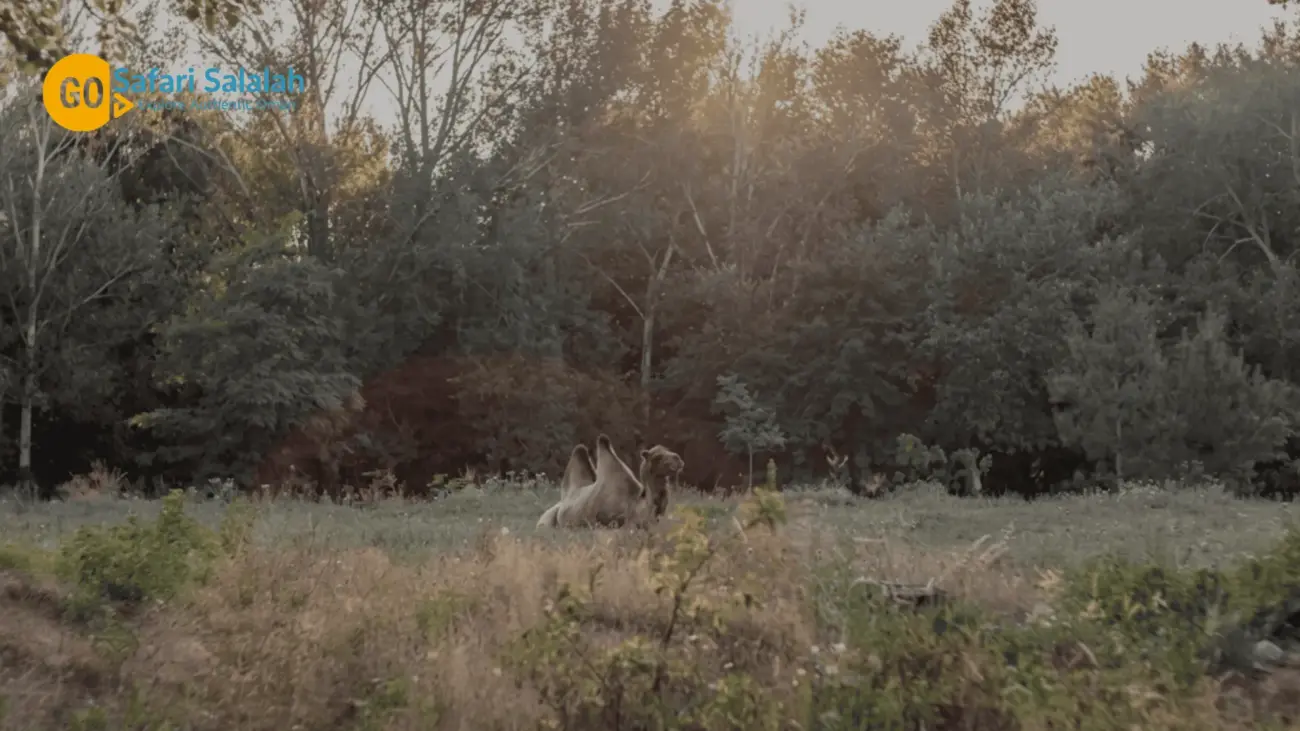
- The Iconic Camels: In Salalah, camels are everywhere. During the khareef in Salalah, they wander the green hills, looking like something out of a prehistoric era. They are a staple of the landscape and are very accustomed to tourists.
- Birdwatching Paradise: The monsoon draws migratory birds from across the Indian Ocean. From flamingos in the lagoons to the rare Abyssinian Roller in the mountains, the salalah autumn is a vibrant display of avian life.
- Marine Life: While the sea is rough, the nutrient-rich cold water brought by the monsoon currents attracts dolphins and whales close to the shore, particularly toward the end of the monsoon in Salalah in September.
The Flora: Beyond Just Grass
The vegetation in Salalah is unique. You will see the “Baobab” trees, which are more common in Africa, standing tall in the Dhofar valleys. There are also various medicinal plants and wild succulents that bloom only during the Salalah in July and August. The smell of the earth during this time—a mix of wet limestone, wild thyme, and frankincense—is a sensory experience that defines the Salalah khareef festival atmosphere.
The Science of the Mist: Why the Monsoon in Salalah is Unique
To truly appreciate the Salalah monsoon season, one must understand the unique meteorological “engine” that creates it. Unlike the tropical monsoons of India or Thailand, which are characterized by heavy thunderstorms and lightning, the monsoon in Salalah is a much gentler, more persistent phenomenon. Known scientifically as the “Somali Jet,” this weather pattern is a result of a complex interaction between the sea, the wind, and the mountains of Dhofar.
The Upwelling Phenomenon and the Cooling Effect
- Cold Water Currents: During the summer months, strong winds push the warm surface water of the Arabian Sea away from the coast, allowing ice-cold water from the depths to rise to the surface. This is called “upwelling.”
- Moisture Transformation: When the warm, moisture-laden air from the Indian Ocean hits this patch of cold water near Salalah, it cools down rapidly, forming thick blankets of fog and stratus clouds.
- The Mountain Barrier: The Dhofar mountain range acts as a physical wall. As the mist is pushed inland, it gets trapped against the mountainside, creating the constant drizzle that sustains the khareef in Salalah.
Why the Salalah Autumn Feels Like a Micro-Climate
This scientific miracle explains why, just 100 kilometers north of Salalah, the desert remains bone-dry and scorching. The Salalah Oman khareef season is effectively a “trapped” climate. This is why the best time to visit Salalah is so strictly defined between late June and September; as soon as the wind direction shifts in October, the upwelling stops, the sea warms up, and the mist vanishes almost overnight, returning the landscape to its arid state.
The Ultimate 7-Day Salalah Itinerary: A Complete Roadmap
For many international travelers, the biggest challenge is organizing the sheer number of attractions into a logical flow. A well-structured Salalah itinerary is essential to avoid spending too much time driving back and forth. Because the weather can vary—misty in the mountains but clearer on the coast—this 7-day plan is designed to give you the most diverse experience of the Salalah monsoon season.
Day 1 to Day 4: Mountains and Waterfalls
- Day 1: The Arrival and the Springs. Start easy with Ayn Razat Salalah and the Haffa Souq to get a feel for the city and the scent of Frankincense.
- Day 2: The Heart of Nature. Spend the entire day in Wadi Darbat Salalah. Bring a picnic and enjoy the boat rides and the massive travertine waterfalls.
- Day 3: The High Peaks. Head to Jebel Samhan Salalah early in the morning to catch the sea of clouds. On the way back, stop at the Tawi Attair Sinkhole.
- Day 4: Chasing the Hidden Falls. Use a 4WD to find Ayn Khor Salalah and Ayn Athum. These are the most photogenic spots of the Salalah in August peak.
Day 5 to Day 7: Coastline and Culture
- Day 5: The West Coast. Visit Mughsail Beach, the Marneef Cave blowholes, and drive the zig-zag road to the Fazayah overlook.
- Day 6: History and Heritage. Explore Al Baleed Archaeological Park and the Museum of the Frankincense Land. Spend the evening at the Khareef Festival Salalah grounds in Ittin.
- Day 7: The East Coast and Mirbat. Visit the old fishing town of Mirbat and the Bin Ali Tomb. This area is often slightly less misty, offering a different perspective of the Salalah travel guide experience.
Traveling with Family: A Safe and Fun Khareef in Salalah
Salalah is widely regarded as one of the safest and most family-friendly destinations in the Middle East. During the Salalah monsoon season, the city turns into a giant playground for children who are fascinated by the fog, the animals, and the outdoor festivals. However, traveling with kids in a damp, mountainous environment requires specific precautions to ensure everyone stays happy and healthy.
Family-Friendly Activities in the Salalah Khareef Festival
- The Ittin Festival Grounds: This is the heart of family entertainment. There are small amusement rides, traditional performances, and plenty of “street food” that kids love, like grilled corn and Omani crepes.
- Camel Encounters: Children will love seeing camels roaming freely. While you should never let children approach them too closely without supervision, watching them graze in the green fields of the Salalah autumn is a highlight for any child.
- The Al Baleed Walkways: The paths at the archaeological park are stroller-friendly and safe, providing a great space for kids to run around while parents soak in the history of the monsoon in Salalah.
Safety Tips for Parents
The most important factor is the terrain. The moss around waterfalls like Ayn Athum is incredibly slippery; always hold your children’s hands and ensure they have shoes with rubber soles. Additionally, while the temperature is cool, the humidity is high. Keep everyone hydrated, and even though the sun is behind clouds, the UV rays can still be strong—apply sunscreen even on misty days. Lastly, keep a light jacket handy for the kids when visiting Jebel Samhan Salalah, as the temperature drop can be sudden and chilly for little ones.
The Frankincense Guide: Purchasing the Gold of the Desert
No visit during the Salalah monsoon season is complete without immersing yourself in the world of Frankincense (Boswellia sacra). For thousands of years, Salalah was the starting point of the “Incense Route,” connecting the Arabian Peninsula to the Roman Empire and beyond. The monsoon in Salalah provides the perfect moisture level for these trees to produce the highest quality resin in the world.
Understanding the Grades of Frankincense
- Hojari (The Finest Grade): This is the highest quality, characterized by its greenish tint and citrusy aroma. It is often used for medicinal purposes or high-end incense.
- Najdi: Harvested from the plateau regions, this grade is slightly more yellowish and has a deep, earthy scent.
- Shazri: A more common grade found in the Salalah travel guide markets, typically used for daily home fragrancing.
- Shaabi: The most affordable grade, often used in large quantities during the khareef festival salalah.
How to Buy Like a Local in Haffa Souq
When you enter the souq during the Salalah autumn, you will be overwhelmed by choices. To ensure you are getting authentic Dhofari frankincense, look for resin that is dry to the touch and not sticky. Always ask for a sample to be burned; the smoke should be white and the scent should be clean, not acrid. Negotiating is part of the culture, especially if you are buying in bulk. Buying frankincense is more than a transaction; it is a piece of the Salalah Oman khareef season that you can take home with you.
Photography Masterclass: Capturing the Mist and Magic
The Salalah monsoon season is a dream for photographers, but it is also a technical nightmare. The constant drizzle, high humidity, and low-light conditions of the khareef in Salalah can challenge even professional equipment. To capture the “Emerald Paradise” effectively, you need a specific set of skills and tools.
Managing Light and Moisture
- Embrace the Low Light: The heavy cloud cover during Salalah in August creates a giant natural softbox. This is perfect for portraits and close-ups of flora, as there are no harsh shadows.
- Using Polarizing Filters: Even on cloudy days, a polarizer can help cut the reflections on wet leaves and rocks, making the green colors look even more saturated and vibrant.
- Long Exposure for Waterfalls: To get that “silky” look on waterfalls like Ayn Athum, use a tripod. However, you must be extremely fast to wipe your lens between shots due to the persistent mist.
Protecting Your Gear in the Monsoon in Salalah
Humidity is the silent killer of electronics. Keep several packets of silica gel in your camera bag at all times. If you are moving from a cold, air-conditioned car to the humid air of Wadi Darbat Salalah, your lens will fog up instantly. Allow 10-15 minutes for your gear to “acclimatize” before you start shooting. Carrying a dedicated “lens umbrella” or a simple plastic rain sleeve for your camera is a hallmark of a prepared photographer in the Salalah travel guide.
Driving in the Khareef: Safety, Insurance, and Road Rules
Navigating the roads during the Salalah Oman khareef season is an adventure in itself, but it requires a high level of alertness. The infrastructure in Oman is excellent, with well-paved roads leading to most major attractions, but the weather adds a layer of complexity that is unique to the monsoon in Salalah.
The Challenges of Monsoon Driving
- The “White-Out” Fog: On mountain passes like the one leading to Jebel Samhan Salalah, visibility can drop to near zero in seconds. It is standard practice to drive with fog lights on, but never use hazard lights unless you are actually stopped.
- Zebra and Camel Crossings: In the mist, animals often huddle on the warm asphalt of the roads. During the Salalah autumn, you must be prepared to stop suddenly for a herd of camels appearing out of the fog.
- Slippery Inclines: Even with a 4WD, the mud on the off-road tracks near Ayn Khor Salalah can be treacherous. Always test your brakes after driving through deep water or heavy mud.
Rental Tips and Insurance
When booking your car for a Salalah itinerary, ensure your insurance covers “off-road” if you plan to visit the more remote springs. Most standard rentals only cover paved roads. Also, check that your rental has a full-sized spare tire and a jack. During the khareef festival salalah, rental prices can double, so booking at least two months in advance is the best way to secure a reasonable rate and a reliable vehicle.
Beyond the Green: A Day Trip to the Empty Quarter (Rub’ al Khali)
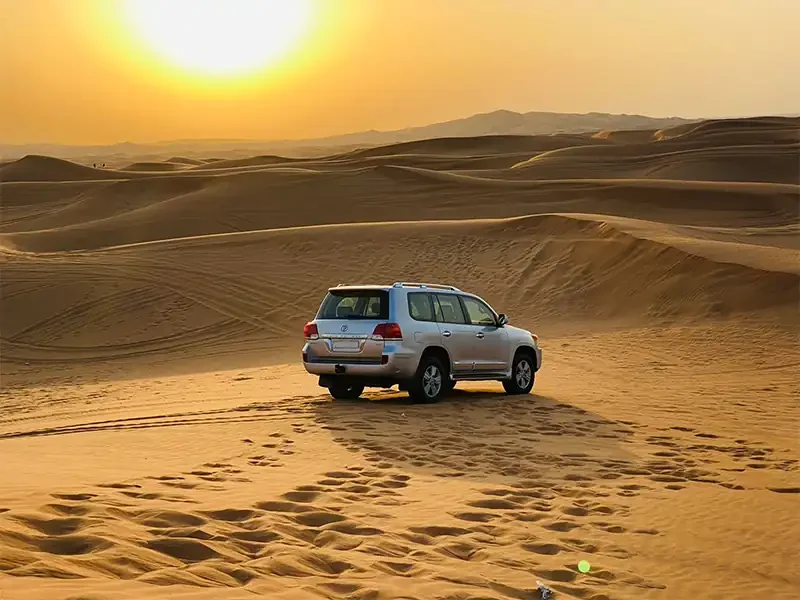
One of the most surreal experiences you can include in a Salalah itinerary is the transition from the lush, misty mountains of the khareef in Salalah to the vast, orange dunes of the Empty Quarter. In less than two hours, you can travel from a tropical rainforest environment to the largest contiguous sand desert in the world. This stark contrast is what makes the Dhofar region one of the most geographically diverse places on earth.
The Journey to Ubar and the Lost City
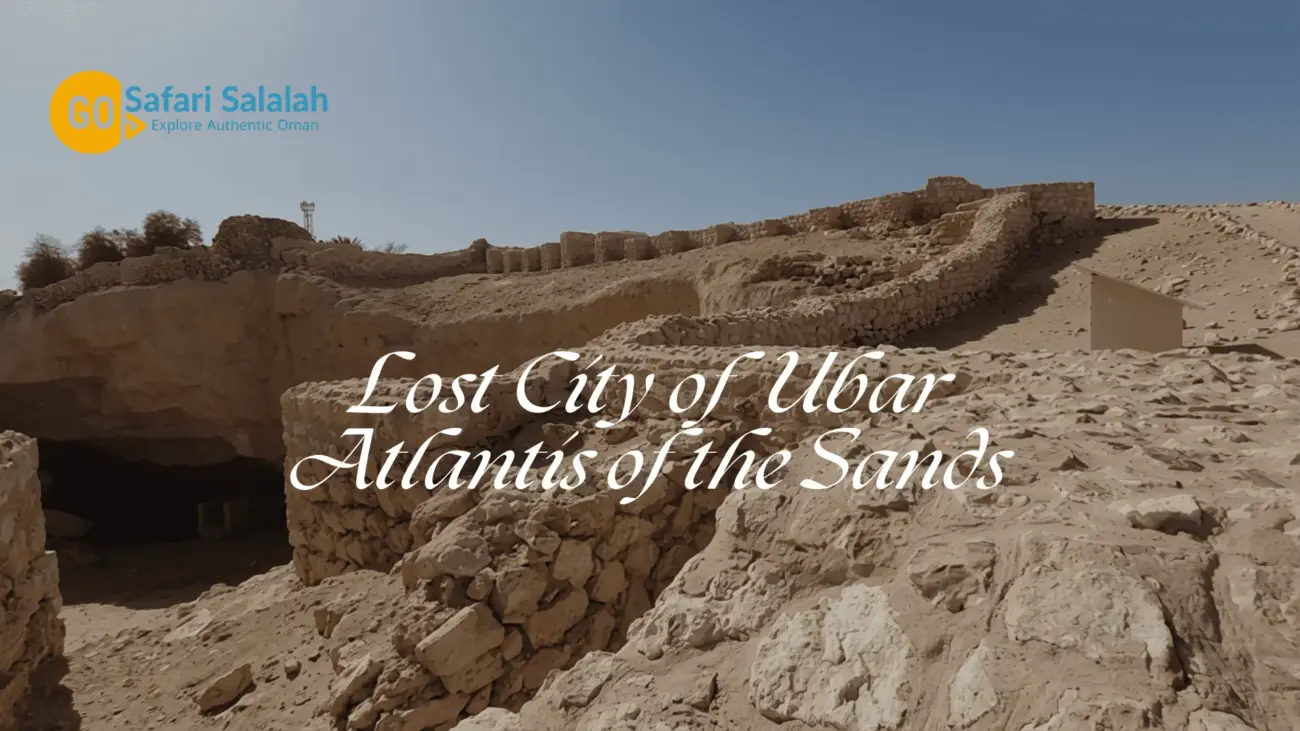
- The Lost City of Ubar: Known as the “Atlantis of the Sands,” this archaeological site was once a vital stop on the Frankincense trail. Visiting it during the Salalah autumn provides a hauntingly beautiful perspective on how civilizations thrived and disappeared in this harsh environment.
- The Giant Dunes of Hashman: For those seeking the classic desert experience, the dunes here can reach heights of over 250 meters. While the monsoon in Salalah keeps the coast cool, the desert remains warm, providing a dry heat that is a total contrast to the humidity of the city.
- Wadi Dawkah: On your way to the desert, you will pass Wadi Dawkah, a UNESCO World Heritage site and a protected park for thousands of Frankincense trees. It is the best place to see the trees in their natural, arid habitat compared to the lush versions in the mountains.
Desert Safety and Logistics
You should never attempt to enter the Empty Quarter without a professional guide and a convoy of at least two 4WD vehicles. Even though it is close to the best places to visit in Salalah in Khareef, the desert is unforgiving. Ensure you carry at least 20 liters of water per person and a satellite phone or GPS tracker. Most tour operators offer “Sunset to Stars” trips that allow you to see the dunes at their most colorful before returning to the cool mist of Salalah for the night.
Seasonal Marine Life: Dolphins and the Cold Water Upwelling
While the Salalah monsoon season is famous for its land-based transformation, the ocean undergoes an equally significant change. The “upwelling” phenomenon that cools the air also brings nutrient-rich, cold water from the deep ocean to the surface. This creates a massive feeding ground for marine life, making the waters off the coast of Salalah a vibrant ecosystem during the monsoon in Salalah.
Marine Encounters During the Khareef
- Dolphin Watching: The coastal waters are home to large pods of Spinner and Bottlenose dolphins. They are often seen jumping through the waves near Mughsail Beach. While boat trips are limited during the peak Salalah in August due to rough seas, you can often spot them from high cliff viewpoints.
- The Mystery of the Arabian Humpback Whale: This is the only non-migratory population of humpback whales in the world. They stay in the waters of Dhofar year-round, and the abundance of food during the Salalah Oman khareef season makes them more active.
- Bird Migrations: The nutrient-rich waters also attract thousands of seabirds. Watching them dive into the surf against a backdrop of mist-covered cliffs is a highlight of the salalah autumn for any nature lover.
Respecting the Ocean
The Arabian Sea during the Salalah khareef season is powerful and unpredictable. Swimming is strictly prohibited at most beaches because of the “rip currents” and massive swells. Even when observing from the shore, stay well back from the waterline. The sea is a force of nature here, and its beauty is best enjoyed from the safety of the limestone cliffs or the designated viewing platforms at the Marneef Cave.
Essential Phrases and Etiquette: Embracing Omani Hospitality
Omanis are world-renowned for their hospitality (Karam), and this is especially true in the Dhofar region during the khareef festival salalah. Understanding a few local customs and basic Arabic phrases will not only make your trip smoother but will also open doors to genuine cultural exchanges. The people of Salalah take great pride in their unique heritage and are usually delighted to share it with visitors.
Social Etiquette for the Salalah Travel Guide
- Dress Modestly: While Salalah is a tourist destination, it is also a traditional society. When visiting public areas, souqs, or the Salalah Khareef festival grounds, ensure your shoulders and knees are covered. This applies to both men and women.
- Accepting Coffee (Kahwa): If a local offers you Omani coffee and dates, it is polite to accept at least one cup. When you have had enough, gently shake your cup from side to side to signal that you are finished.
- Photography of People: Always ask for permission before taking photos of locals, especially women. Most men and children are happy to pose, but asking “Mumbkin Soura?” (May I take a photo?) is a mark of respect.
Useful Arabic Phrases for Your Salalah Itinerary
English | Arabic (Transliteration) | Context |
Hello / Peace be upon you | السلام عليكم (As-salamu alaykum) | The standard greeting. |
Thank you | شكراً (Shukran) | Essential for every interaction. |
How much? | بكم؟ (Bikam?) | Useful in the Haffa Souq. |
Where is…? | أين…؟ (Ayna…?) | Helpful for finding “Ayns” or springs. |
Beautiful! | جميل! (Jameel!) | You will use this often for the scenery! |